
If you are brand new to Colby or requesting accommodations for the first time ever, click on the link below to begin your application:
Link to Colby Accommodations Application
The tutorial for how to use the AIM system can be accessed here:
Academic accommodations are changes made to the instruction, policies, or physical environment of the classroom to ensure access for students with disabilities while not fundamentally altering the nature of the course. We work with you individually to determine the barriers you face and effective accommodations to address those barriers. We also identify and connect you to all of the academic resources available on campus.
To request an academic accommodation, complete an accommodations application in the AIM system and submit disability specific documentation along with your application.
Once submitted, our office will contact you to set up a meeting. During our meeting, we will discuss your academic learning style, strengths, needs, and goals to determine effective accommodations as well as academic resources on campus.
Central to the process of receiving academic accommodations in higher education is having a conversation with your professors. As these accommodations are not retroactive, it is important to meet with your professors early in the semester to discuss how you will receive your accommodations as well as how you learn best whether you end up needing to use your accommodations or not.
You will need send your accommodations to your professors each semester using the AIM system.
Colby College believes that the residential college experience is integral to a liberal arts education. Colby is fully committed to ensuring that the residential experience — and the educational experience more broadly — is fully accessible to and inclusive of all students. Housing accommodations are an important component in the work to achieve full and fair access for students. See below to learn more about housing accommodations and the application process.
At Colby, the standard housing assignment is a two- or three-person room with bathrooms located on the same floor, but not in the room. We are unable to approve accommodation requests for housing assignments based on a student’s preference, rather than need, or a desire for a particular kind of living environment, such as a certain kind of room or location or a quiet place to study. (We work to support student access to quiet spaces for study through other means.) Given the small number of single rooms on campus, they are not commonly granted as accommodations. Requests for a single room will be reviewed individually and, in some cases, additional information or documentation may be requested.
Housing accommodations are approved on a yearly basis, which means that students must apply for housing accommodations during each year they are at Colby.
Students must submit documentation – typically but not always a letter from a medical provider or mental health professional confirming the relevant diagnosis and describing the need for the housing accommodation – along with their application. The same documentation may be sufficient to indicate a continued need for housing accommodations for multiple years, but the Office of Student Access and Disability Services may request updated documentation in cases where the ongoing need for accommodations is unclear.
Applications for housing accommodations are due each spring for the following academic year at approximately the same time as the wider housing selection process. Each year, students will receive information about the housing accommodation application process from the Office of Campus Life and the Office of Student Access and Disability Services.
The Accommodations Committee, comprising representatives from the Office of Campus Life, the Office of Student Access and Disability Services, the Title IX Office, and the Office of the Dean of Spiritual and Religious Life, makes decisions on housing accommodation applications and communicates those decisions to students. The Committee uses a collaborative approach and considers each request for housing accommodations on a individual basis. Students are able to appeal decisions to the Dean of Students. Students seeking to appeal a decision should contact the Director of Student Access and Disability Services for additional information.
Though accommodation applications are due each spring for the following academic year, applications are accepted on a rolling basis throughout the year. We cannot guarantee whether or when a room to meet an accommodation approved after the spring deadline will become available. Placement depends on the availability of appropriate rooms.
To request housing accommodations, complete the following steps:
1. If you are applying for accommodations during the spring housing selection process for the next academic year, be sure to complete the application for accommodations in the Colby housing portal. Information about how to do this will be sent each year by the Office of Campus Life. If you are applying for accommodations at some other point, move to the next step.
2. If you have never received accommodations of any kind at Colby, submit an accommodation application in AIM, the system we use to manage accommodations.
3. If you have received accommodations before, or if you are submitting updated documentation to support a housing accommodation application for a new academic year, upload your documentation to AIM.
4. Wait to hear from the Accommodations Committee about your housing accommodation application. You will be contacted by the Director of Student Access and Disability Studies with information about the Committee’s decision and next steps.
Note: If you are submitting an application after the deadline during the spring semester, follow the same steps described above. Incoming first-year students will have a different deadline for submitting housing accommodation requests. The college will send information about the housing accommodation process and deadline to all incoming students.
The Office of Student Access and Disability Services collaborates with the Colby Health Center and Dining Services to ensure that students with individualized dietary needs, food sensitivities, or significant food allergies can enjoy a safe and healthy dining experience at Colby. We use an individualized process in which you work with Dining Services and Colby Nutritionists to determine the best plan for your needs.
To request a dining accommodation, complete an accommodations application in the AIM system and submit documentation of your needs along with your application.
Once you have submitted an application, we will email you to set up a meeting where we will discuss your dietary needs and how we can ensure that you have access to safe and nutritious food throughout your time at Colby.
To request an accessible parking pass, submit the following documents using the AIM system linked above. To see an overview of how to use the AIM system, see this linked AIM overview document.
Forms
At Colby we recognize the need for assistance/emotional support (ESA’s) and service animals as an accommodation to ensure access to the full Colby experience. In tandem with Campus Life, the Office of Student Access and Disability Services works to support a healthy, safe and successful residential experience for students and their assistance or service animals.
Please read our Service/Assistance Animal Policy to better understand your responsibilities with regards to our policy.
To request an Assistance or Service Animal as an accommodation, submit the following documents using the AIM system linked above. To see an overview of how to use the AIM system, see this linked AIM overview document.
Once your documents have been submitted, our office will reach out to discuss what you can expect before your request is submitted to our committee for review. While requests will be reviewed on a rolling basis, because you are not permitted to have your Assistance/Service Animals on campus with permission, we suggest you start the process as early as possible.
FORMS
“To become acquainted with other cultures by learning a foreign language and by living and studying in another country or by closely examining a culture other than one’s own.”
-#3 of the Colby Plan (Student Handbook, p.7)
Learning a foreign language is an integral part of the liberal arts curriculum at Colby College. Yet for select students with documented language-based learning disabilities, fulfilling this requirement can present an undue burden. To support these students, Colby College offers a modification of the foreign language requirement, which allows eligible students to study the experiences of a language community through a sequence of courses across multiple disciplines.
The Foreign Language Modification committee consists of the Associate Director of Student Access & Disability Services, a Psychologist or Educational Consultant with expertise in language acquisition, and members from the Foreign Language Departments. The committee meets once a semester to review petitions. Students interested in petitioning the Foreign Language Modification Committee are encouraged to meet with the Director of Student Access & Disability Services in advance of the semester in which they wish to petition to review the process and required paperwork. Petitions will not be heard from students who have completed the three required language courses.
Forms
Temporary supports are available for students managing an injury or illness that is expected to last only a short period of time. Our office collaborates with all members of campus to create an individualized and responsive plan for accommodations to support the needs of temporary injuries or illnesses.
To request temporary supports, submit the following documents using the AIM system linked above. To see an overview of how to use the AIM system, see this linked AIM overview document.
Once submitted, our office will contact you to discuss your needs and determine the most effective accommodations across all aspects of your Colby experience.
Forms
Academic accommodations are changes made to the instruction, policies or physical environment of the classroom to ensure access for students with disabilities while not fundamentally altering the nature of the course. We work with you individually to determine the barriers you face and effective accommodations to address those barriers. We also identify and connect you to all of the academic resources available on campus.
Colby’s Office for Student Access and Disability Services is committed to ensuring access for students with disabilities across all aspects of campus. To do this, we use an individualized yet collaborative approach to determining possible barriers and generating effective accommodations. However, disagreements over accommodation determination and implementation may arise. To support positive resolutions, our office uses a grievance process.
Students who feel their accommodations were inappropriately denied or implemented are first asked to find a resolution by working with the Director of Student Access and Disability Services. If a resolution can not be found, students are able to grieve the issues by submitting a formal written request to the Accommodation Grievance Committee. An overview of the process and related forms can be found below.
Once a grievance has been submitted, the Director of Student Access and Disability Services will be given 5-7 working days to submit a response. Once both are received the Accommodation Grievance Committee will have 5-7 working days to make a determination regarding the grievance.
We strongly encourage students who wish to submit a grievance to speak with their class dean to review the process. Grievances will not result in discrimination or retaliatory actions against the grieved party.
The Disability Awareness Board (DAB) is a student group that works to make Colby more accessible, inclusive, and equitable. It provides community and solidarity for those who experience or are interested in learning more about issues related to disability and higher education. Members work closely with the Office of Student Access and Disability Services and other faculty and staff members to raise awareness about learning differences, neurodiversity, and physical and mental differences and to promote fully accessible educational experiences.
For more information about DAB and to learn when DAB is meeting this semester, please contact [email protected].

Kevin Murray, Ph.D.
Kevin came to Colby in 2019 and began working in the Office of Student Access and Disability Services in 2022. Promoting educational opportunity has been the common thread in his work. Before coming to Colby, he worked with the TRIO Student Support Services program at York County Community College in Wells, Maine to support first-generation college students, low-income students, and students with disabilities. He earned a Ph.D. in Educational Foundations and Policy from the University of Colorado Boulder in 2017, and he has taught and written on issues related to education, democracy, and disability.
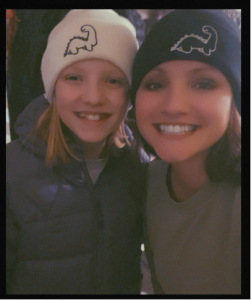
Miranda is excited to begin a new chapter at Colby as Assistant Director of Student Access and Disability Services. She has spent several years working as a special education teacher in Maine public schools. Education has always been a big part of her life, and she is looking forward to bringing her experience, love of learning, and connection with students to Colby. Outside of work, she loves spending time with family, including her daughter Ryah. She loves cooking and baking along with gardening and taking on new projects.
